Article Template Display
TITLE of the article
Firstname Lastname 1, Firstname Lastname 2, Firstname Lastname 3*
¹ Affiliation 1; e-mail@e-mail.com
² Affiliation 2; e-mail@e-mail.com
³ Affiliation 3; e-mail@e-mail.com
* Correspondence: e-mail@e-mail.com; for multiple corresponding authors, include author initials.
Abstract:Provide a self-contained summary (150–250 words) describing the purpose, key findings, and implications of the study. We recommend covering the following logical components: (1) Introduction: research background, problem statement and objectives; (2) Literature Review or Theoretical Framework: prior scholarship and theoretical foundations; (3) Methodology: research design, data, and analytical strategy; (4) Results and Discussion: core findings and interpretation; (5) Conclusion: insights, implications and future research directions.
The abstract is a single paragraph and must contain no citations, abbreviations, or references to tables or figures.
Format: “Abstract” (full-width bold), no first-line indent, 11 pt, 1.5-line spacing.
Keywords: keyword 1; keyword 2; keyword 3; keyword 4; keyword 5 (4–6 keywords required). Select a mix of broad terms to boost discoverability and specialized terms reflecting the paper’s focal topic.
Format: 11 pt. No blank line between the abstract and keywords; insert one blank line separating keywords from the main text. Each keyword uses title case, separated by semicolons.
1. Introduction
The Introduction should clearly and logically establish the research background and context, define the research problem, identify gaps in the existing literature, and state the study’s objectives and core contributions. Summarize relevant prior work to situate your research within academic and practical contexts. Conclude this section by outlining the paper’s structure or stating the central research questions or hypotheses.
Heading rule: Level 1 heading left-aligned, bold; numeric label followed by a period and one space before heading text. All headings have 0.5 line space before and after, 1.5-line spacing.
Body text: 11 pt, 1.5-line spacing, justified alignment, first-line indent of 0.5 character.
2. Literature Review or Theoretical Framework
This section delivers a critical, thematically organized synthesis of relevant prior research. Focus on key theories, models and empirical evidence, distinguishing established findings from unresolved gaps, contradictions and open questions. Analyze and compare prior studies to demonstrate the novelty and necessity of your inquiry. If a theoretical framework underpins the work, explain and justify it explicitly, and illustrate how it shapes hypotheses, research design or empirical strategy.
Recommended substructure for this section:
Overview of the Research Area: Concise introduction to the broader field for contextualization.
Summary of Major Studies: High-impact and recent relevant work, including their core findings and contributions.
Identification of Research Gaps: Explicitly document unaddressed questions, conflicting results or limitations in existing scholarship.
Conceptual or Theoretical Basis: Define core constructs and their interrelations within your theoretical lens.
Connection to Current Study: Explain how your analysis extends, revises or departs from prior literature to signal originality.
Logical Flow and Clarity: Organize content conceptually rather than as disconnected study summaries, with transitional language leading to your hypotheses or research questions.
Level 2 headings: left-aligned, bold; format example: 2.1 Background of Literature, no period after the second numeral, one space after numerals.
Level 3 headings: left-aligned, italic (not bold). Level 4 headings: bold inline headings without standalone line breaks.
3. Results and Discussion
This section presents, interprets and contextualizes findings against your research objectives, hypotheses and theoretical expectations. Address what you find, how results align or diverge from existing evidence, the substantive importance of patterns, and promising avenues for further investigation.
3.1 Subsections
Bulleted lists:
●Bullet 1;
●Bullet 2;
●Bullet 3…etc.
Numbered lists:
3.1.1.1 Number 1
3.1.1.2 Number 2;
3.1.1.3 Number 3…etc.
3.2 Figures, Tables, and Schemes
All figures and tables should be citied in the main text as Figure 1, Table 1, etc.

Figure 1: This is a figure. Schemes follow the same formatting.
Table 1: This is a table. Tables should be understandable without referring back to the main text.
| Title 1 | Title 2 | Title 3 |
|---|---|---|
| Entry 1 | Data 1 | Data 3 |
| Entry 2 | Data 2 | Data 4 |
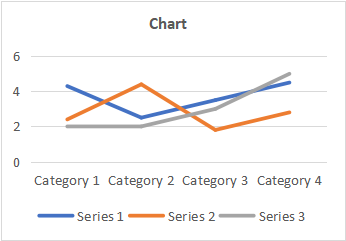
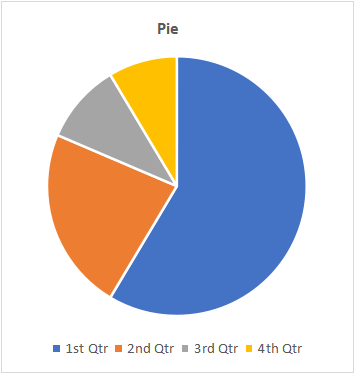
Figure 2-3: This is a figure. If there are multiple figures, they should be listed as: (the name of figure/Chart) Description of what is contained in the first figure; (Pie) Description of what is contained in the second figure. Figures should be placed in the main text near to the first time they are cited.
Table 2: This is a table. Tables should be placed in the main text near to the first time they are citied.
| Title 1 | Title 2 | Title 3 | Title 4 |
|---|---|---|---|
| Entry 1 | Data | Data | Data |
| Entry 2 | Data | Data | Data |
| Entry 3 | Data | Data | Data |
All tables and figures must be cited in the main text (e.g., Table 1, Figure 1).
Tables:All tables follow the three-line table format. Table captions are 10 pt, centered above each table. Table titles use title case and appear below the label. Table notes are single-spaced, ordered: general note → specific note → probability note, placed below the table with a first-line indent of 0.5 character. Single-line cell content is centered; multi-line cell content is left-aligned.
Tables are numbered sequentially and positioned close to their first in-text citation. A 0.5-line space is added in the main text following each table.
Figures:Figure captions are 10 pt, centered below the image. Figure titles use title case and appear below the label. Figures are numbered sequentially: Figure 1, Figure 2; subfigures are labelled Figure 1a, Figure 1b. Minimum resolution: 300 dpi. Figures are placed close to their first in-text citation. Schemes follow identical formatting rules.
3.3 Editing of mathematical components
3.3.1 Displayed Equations
Every displayed equation must be introduced and discussed in the running text. Equations are numbered sequentially with the number right-aligned in parentheses (1), (2). Reserve 1.5-line spacing above and below each equation.
Example:
E=mc2 (2)
where the increased relativistic mass [m]of a body multiplied by the speed of light squared [c2 ] equals the kinetic energy [E] of that body.
3.3.2 Inline expression
Short formulas and symbols are embedded directly within the text.
Example: The production cost function can be defined as C=FC+VC(q), where FC represents fixed cost and VC(q) is the variable cost depending on output q.
3.3.3 Symbols and Units
Consistently apply International System of Units (SI Units) throughout the manuscript.
Example: kWh – Kilowatt hour, m³ – cubic meter, s – second, kg – kilogram, mol – mole.
3.3.4 Theorems, lemmas, propositions, and corollaries
Theorems, lemmas, propositions and corollaries receive sequential numbering across the manuscript or within their section (Theorem 1, Lemma 1, Proposition 1, Corollary 1, etc.).
Example
Theorem 1:
Proof 1:
Corollary 1:
Lemma 1:
4. Discussion
Discuss core findings relative to your research objectives and published literature. Explain the theoretical and practical significance of results, highlight consistencies and discrepancies with prior work, and articulate how findings advance knowledge in your field.
5. Conclusion
Do not introduce new data, analyses or citations in the Conclusion. Synthesize the study’s key insights and deliver final takeaways. A brief outlook for future research is permitted.
6. Patents (if applicable)
If your work includes patented technology, processes or inventions, supply complete, accurate patent information.
7. Author Contribution
For multi-author manuscripts, describe each contributor’s responsibilities using the CRediT (Contributor Roles Taxonomy) framework. Use author initials to assign roles:
Conceptualization (initials), Data curation (initials), Formal analysis (initials), Funding acquisition (initials), Investigation (initials), Methodology (initials), Project administration (initials), Resources (initials), Software (initials), Supervision (initials), Validation (initials), Visualization (initials), Writing – original draft (initials), Writing – review & editing (initials).
8. Funding / Acknowledgements
Disclose all financial support for the research clearly and completely. Separate funding sources if different grants support distinct parts of the project. Include the full official name of each funding body, grant number(s), and grant recipient(s).
Example: The research was supported by the [Name of the organization], Grant #12345.
Example: This research received no external funding.
Acknowledgements should name individuals who provided specific contributions but do not qualify for authorship.
Format note: This section is 10 pt, heading left-aligned, body text with first-line indent of 0.5 character; separated by one blank line from adjacent sections.
9. Abbreviations (if applicable)
Define abbreviations on their first appearance in the main text. A standalone abbreviation list may be included here for convenience.
Example:
JFED – Journal of Financial and Economic Dynamics
AI – Artificial Intelligence
SDGs – Sustainable Development Goals
ICT – Information and Communication Technology
WTO – World Trade Organization
10. Competing Interests, Data Availability, Ethical Approval, Informed Consent, Preregistration (where applicable)
These statements are placed after Acknowledgements and before References.
11. References
Format: 10 pt, 1.5-line spacing, hanging indent of 0.5 inch, APA 7th edition. Journal titles and volume numbers are italicized; issue numbers (when available) are placed in parentheses immediately after the volume number and are not italicized. Full inclusive page ranges of the article must be provided. If an article uses an article number instead of page numbers, use “Article XXXX” in place of the page range.
DOI required for all online sources (format: https://doi.org/xxxx)
Omit “Retrieved from” for stable URLs and DOIs
In-text citations appear in parentheses before terminal punctuation.
One author: (Author Last, Year) | Author Last (Year)
Two authors: (Last1 & Last2, Year) | Last1 and Last2 (Year)
Three or more authors: Always use et al. for first and subsequent citations (Last1 et al., Year)
Direct quote: (Smith, 2020, p. 5) or (Smith & Lee, 2021, pp. 50–55)
Web source without page number: (Author, Year, para. X)
No named author: (Title, Year) | (Shortened Title, Year)
No date: (Author, n.d.)
Group/Organizational Author
First citation: (American Psychological Association [APA], 2020)
Subsequent citations: (APA, 2020)
Reference examples (APA 7th):
Journal Article
Author, A. A., Author, B. B., & Author, C. C. (Year). Article title (sentence case). Journal Title, Volume(Issue), page range. https://doi.org/xxxx
Example: Bali, T. G., Peng, L., Shen, Y., & Tang, Y. (2017). Liquidity shocks and stock market reactions. Journal of Financial Economics, 124(1), 122–142. https://doi.org/10.1016/j.jfineco.2017.01.003
Edited Book Chapter
Author, A., & Author, B. (Year). Title of chapter. In E. Editor & F. Editor (Eds.), Title of book (2nd ed., Vol. 2, pp. 110–120). Publisher.
Book
Author, A., & Author, B. (Year). Title of book (3rd ed.). Publisher.
Conference Presentation
Author, A. B., Author, C. D., & Author, E. F. (Year, Month Day). Title of presentation [Conference presentation]. Name of Conference, Location, Country. URL
Web Page / Online Report
Organization Name. (Year). Report title. Site Name. URL
Personal communications are cited in-text only and excluded from the reference list: (A. Author & B. Author, personal communication, Year).
12. Footnotes
In-text notes are formatted as footnotes (not endnotes). Footnotes: 9 pt, fixed line spacing of 12 pt.
13. Appendices (if needed)
Appendices appear after the reference list. Tables and figures within appendices are numbered Table A1, Figure A2, Figure A3, etc.
Core Page Setup (binding formatting rules)
Margins: 1 inch (2.54 cm) on all sides
Font: Times New Roman
Article title: 16 pt, bold, centered, 1.5-line spacing
Abstract, keywords, body text: 11 pt
Author names and affiliations, author biographical information, figure captions, table captions, supplementary remarks and acknowledgements: 10 pt
Footnotes, copyright statement, page numbers: 9 pt
Alignment: Justified alignment with both margins
Indentation: Body paragraphs adopt a first-line indent of 0.5 character. The reference list uses a hanging indent of 0.5 inch (APA 7 default). Table notes have a first-line indent of 0.5 character.
Line spacing: 1.5-line spacing for the title page, abstract, body, references, block quotes, tables and figures. Leave a blank line between paragraphs. Copyright statement and footnotes use fixed line spacing of 12 pt. 1.5-line spacing is reserved above and below each equation.
Page header (Professional only): Reserved for publishing information
Page numbers: 9 pt, centered in the footer, numbered consecutively starting from 1 for each issue.
Copyright statement: Placed exclusively in the footer of the title page; 9 pt, fixed line spacing of 12 pt, separated from the main text above by a solid black horizontal rule.
Title page author block: Author names presented as first name initial + middle initial + last name (e.g., Jane M. Smith); 10 pt, italic, with one blank line above and below the author block, 1.5-line spacing. Provide full secondary affiliations, complete institutional addresses including city and postal code (no subdistrict-level administrative information), and country for every author. Corresponding author email must be clearly marked.
Writing Style
Active voice is preferred (e.g., “We analyzed” rather than “Data were analyzed”)
Third-person perspective; first-person is permitted when describing authors’ research actions
Avoid contractions, slang, and colloquial language
Define abbreviations on first use (e.g., American Psychological Association [APA])
Numbered hierarchical headings using Arabic numerals (1.1, 1.1.1, 1.2, 1.2.1, etc.) are recommended to improve logical clarity.
Note: Where inconsistencies exist between content sections, the formatting rules laid out in the Core Page Setup section take precedence. All manuscripts undergo at least one round of double-blind review.